
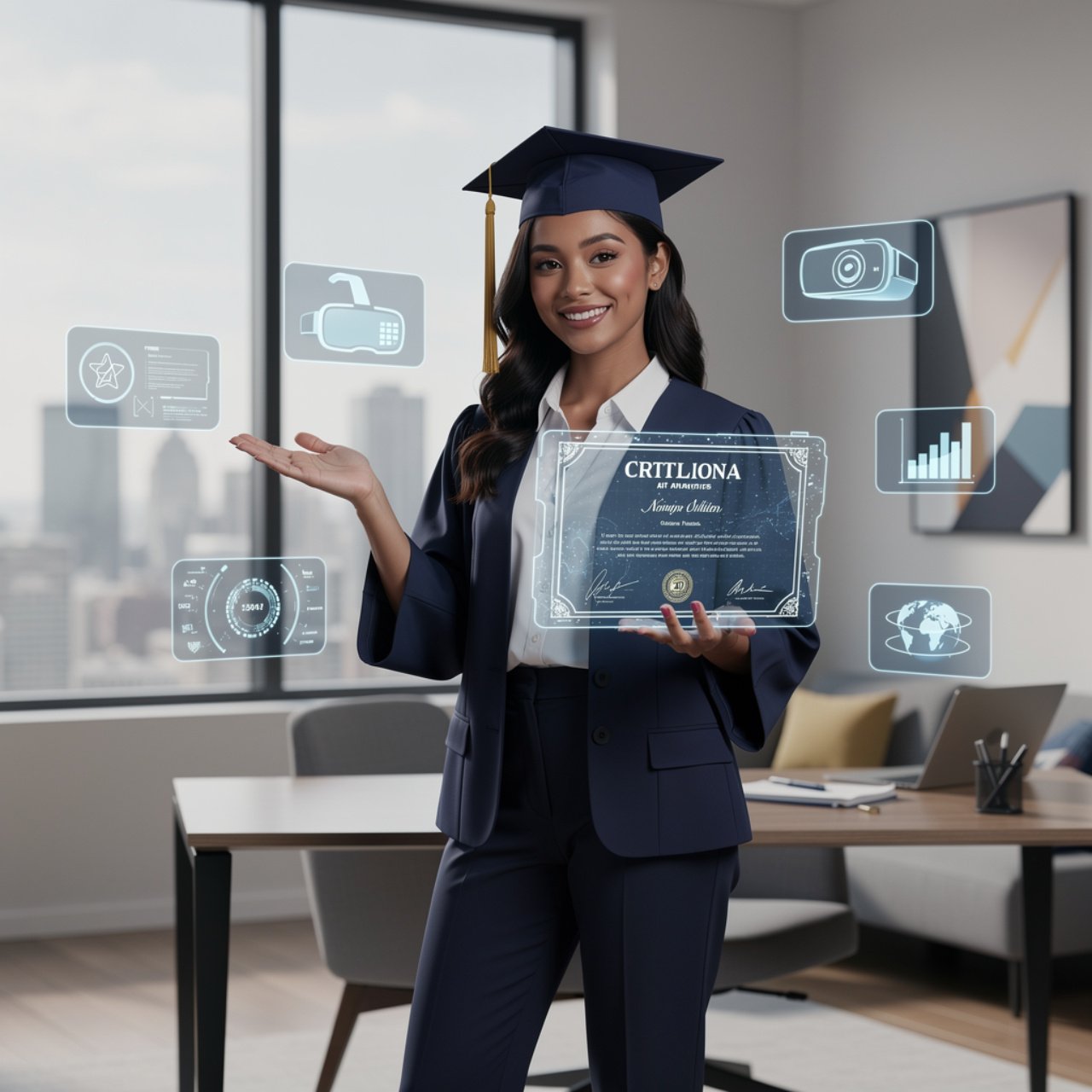
Not long ago, earning a degree online often came with an uncomfortable question.
“Is it as good as a traditional degree?”
For years, employers, students, and even universities themselves debated whether online education could truly match the experience of studying on campus. The skepticism wasn’t entirely unfounded. Early online programs often relied on recorded lectures, outdated learning platforms, and minimal interaction between students and professors.
Today, that conversation is beginning to fade.
The rapid evolution of educational technology has transformed online learning from a convenient alternative into a serious academic option. Artificial intelligence, immersive classrooms, cloud-based collaboration, real-time simulations, and advanced learning analytics are changing not only how students study but also how employers perceive online degrees.
The value of an online education is no longer determined simply by where students learn. Increasingly, it’s shaped by how well technology helps them develop practical skills, collaborate with others, and prepare for modern careers.
The Reputation Gap Is Narrowing
For decades, online degrees carried a stigma.
Some employers assumed remote education lacked academic rigor, while students worried that earning a diploma outside a traditional campus would put them at a disadvantage in the job market.
That perception has changed for several reasons.
First, many of the world’s most respected universities now offer online degrees alongside their on-campus programs. In many cases, students receive the same curriculum, learn from the same faculty, and earn the same diploma.
Second, the modern workplace has become increasingly digital. Companies now hire remote employees, manage international teams, and rely on collaboration tools every day. Students who complete an online degree often graduate with experience navigating the same digital environments they’ll encounter professionally.
As remote work becomes more common, studying remotely no longer seems unusual—it feels increasingly relevant.
Learning Is Becoming More Personalized
One of the biggest weaknesses of traditional education has always been scale.
A professor teaching 200 students cannot realistically adapt every lesson to every individual’s pace.
Technology is beginning to solve that problem.
Modern learning platforms analyze how students interact with course materials. They can identify which concepts take longer to understand, recommend additional exercises, and suggest personalized study plans.
Artificial intelligence is accelerating this shift even further.
Instead of offering every student identical explanations, AI-powered learning assistants can provide different approaches depending on how someone learns best.
A student struggling with statistics may receive visual examples and additional practice questions, while another who masters the topic quickly can move on to more advanced material.
This kind of personalization was almost impossible in traditional classrooms.
Practical Skills Matter More Than Ever
One criticism of higher education has persisted for years: graduates sometimes leave college with strong theoretical knowledge but limited practical experience.
Technology is helping close that gap.
Instead of simply reading about marketing strategies, students can launch digital advertising campaigns inside simulated business environments.
Finance students can analyze live market data.
Cybersecurity students can practice defending virtual computer networks.
Future engineers can test designs through sophisticated software before ever entering a physical laboratory.
These experiences make learning feel closer to the workplace.
Employers increasingly value graduates who have already solved realistic problems rather than simply memorized textbook concepts.
Collaboration Doesn’t End When Classes Go Online
One of the oldest criticisms of online education is that it lacks the social interaction of a physical campus.
That may have been true when online learning meant downloading assignments and sending emails.
Today’s digital classrooms look very different.
Students now collaborate through:
- Shared digital workspaces
- Live discussion sessions
- Interactive whiteboards
- Team-based research projects
- Video collaboration platforms
- Cloud-based document editing
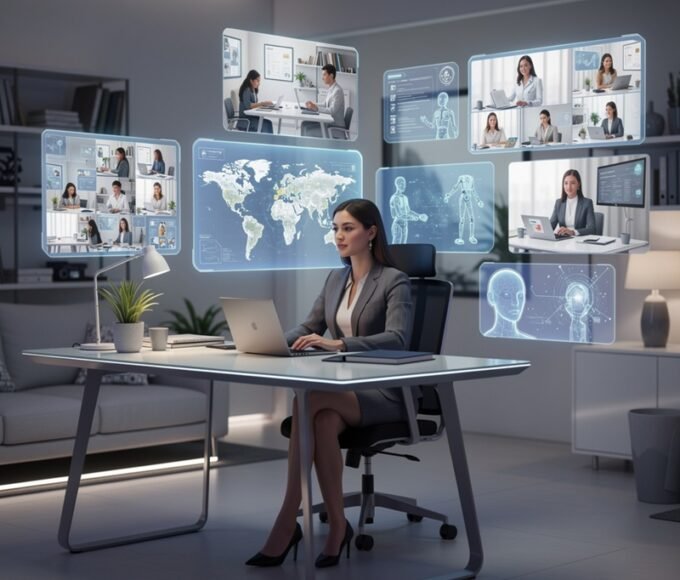
In many online programs, group projects involve classmates living in different states—or even different countries.
This global collaboration reflects how many modern companies operate.
Learning to communicate across time zones, cultures, and digital platforms has become a valuable professional skill in itself.
Artificial Intelligence Is Becoming a Learning Partner
Perhaps no technology is changing education faster than artificial intelligence.
Used responsibly, AI doesn’t replace learning—it enhances it.
Students can now:
- Break complex topics into simpler explanations.
- Generate customized practice quizzes.
- Receive instant feedback on assignments.
- Explore alternative solutions to difficult problems.
- Organize research more efficiently.
- Create personalized revision schedules.
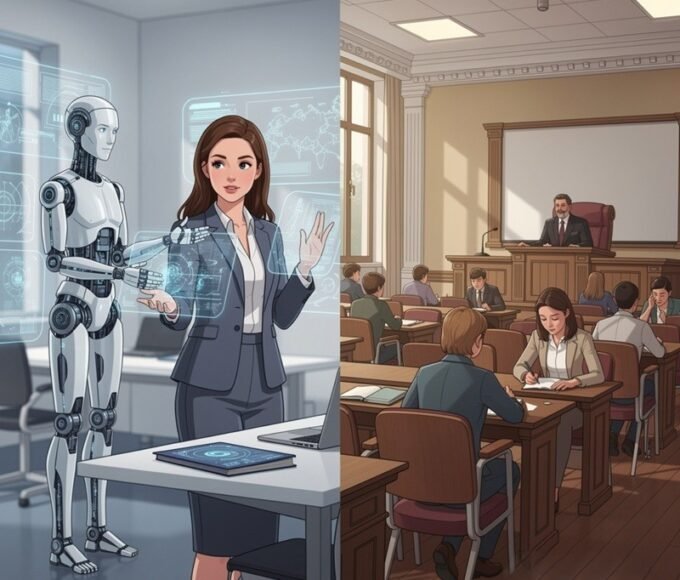
This doesn’t eliminate the need for professors.
Instead, it shifts their role.
Rather than spending entire lectures covering foundational material, instructors can dedicate more time to discussion, critical analysis, mentorship, and solving real-world problems.
Education becomes less about delivering information and more about developing judgment.
Virtual Reality Is Expanding What Online Learning Can Do
Some subjects have always been difficult to teach remotely.
Medicine.
Engineering.
Architecture.
Laboratory sciences.
Technology is changing that as well.
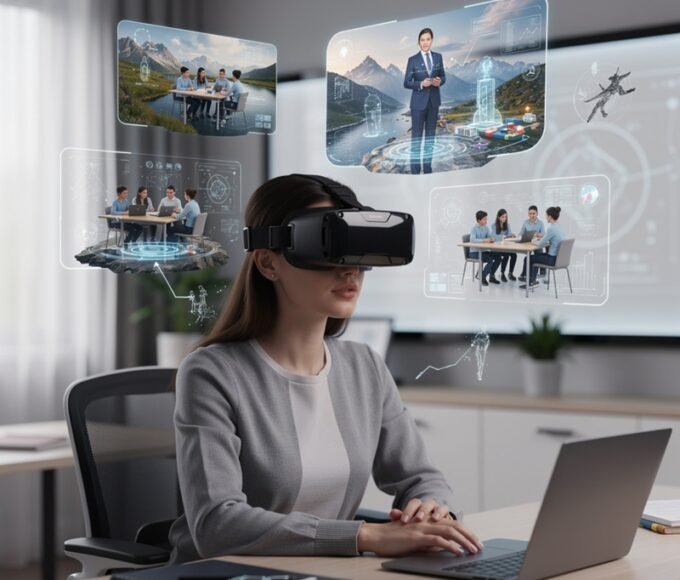
Virtual reality allows students to step inside environments that would otherwise require expensive facilities or specialized equipment.
Imagine:
- Performing a virtual chemistry experiment.
- Walking through a historical archaeological site.
- Exploring the human circulatory system from the inside.
- Practicing emergency medical procedures repeatedly without risk.
- Inspecting engineering structures before they’re built.
These experiences don’t completely replace physical training, but they provide opportunities that traditional online education simply couldn’t offer a few years ago.
Data Is Helping Universities Improve Student Success
One of technology’s least visible—but most important—contributions is learning analytics.
Modern educational platforms collect information about how students engage with coursework.
Universities can identify:
- Which lessons students struggle with most.
- Where learners typically stop watching lectures.
- Which assignments cause the highest failure rates.
- Which teaching methods improve performance.
This data allows institutions to improve courses continuously rather than waiting years to update them.
It also helps advisors identify students who may need support before academic problems become serious.
Instead of reacting after someone falls behind, universities can intervene earlier.
Employers Are Looking Beyond the Classroom
Technology has also changed how employers evaluate graduates.
Recruiters increasingly care less about whether learning happened inside a lecture hall and more about whether applicants can demonstrate relevant skills.
Many online programs now incorporate:
- Digital portfolios
- Industry certifications
- Capstone projects
- Real-world consulting assignments
- Internship partnerships
- Employer-sponsored case studies
These experiences give graduates something concrete to show during hiring conversations.
A portfolio demonstrating completed projects often carries more weight than simply listing coursework on a résumé.
Lifelong Learning Is Becoming the New Normal
Perhaps the biggest shift isn’t happening among college freshmen.
It’s happening among working professionals.
Technology has made it easier than ever to return to education without leaving a career.
Professionals can:
- Earn graduate degrees while working full-time.
- Complete certificates in emerging technologies.
- Learn new software used in their industry.
- Transition into entirely new careers.
Instead of education being confined to four years after high school, it increasingly becomes something people revisit throughout their lives.
Online universities are particularly well positioned to serve this growing audience.
Challenges Still Need to Be Solved
Technology has dramatically improved online education, but challenges remain.
Not every student has access to reliable internet or modern devices.
Some disciplines still require hands-on clinical or laboratory experience that cannot be fully replicated digitally.
Academic integrity has become more complex as AI tools grow more sophisticated.
And perhaps most importantly, technology cannot completely replace human mentorship, meaningful discussion, or the relationships that often shape a student’s academic journey.
The most successful online universities understand this.
Rather than using technology to remove people from education, they use it to make human interaction more valuable.
Looking Ahead
The question is no longer whether online degrees can compete with traditional education.
Instead, it’s whether technology will eventually allow online learning to surpass some aspects of the traditional model.
Personalized instruction, global collaboration, continuous feedback, flexible schedules, and workplace-relevant training are advantages that many physical classrooms struggle to match at scale.
That doesn’t mean campus education will disappear. Universities offer experiences—research opportunities, laboratories, social communities, and face-to-face mentorship—that remain deeply valuable.
But the distinction between “online” and “traditional” education is becoming less meaningful each year.
The strongest universities of the future are unlikely to be defined by where students sit during class.
They’ll be defined by how effectively they combine technology, expert teaching, and real-world learning to prepare graduates for careers that are evolving faster than ever before.
In the end, the value of a degree won’t depend on whether it was earned online or on campus. It will depend on whether it equips students with the knowledge, adaptability, and practical skills to thrive in a world where learning never truly ends.



Leave a comment